
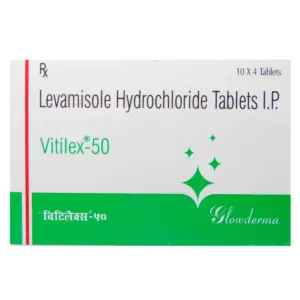
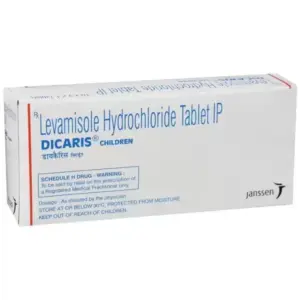
Vermisol 50 Tablet (Levamisole)

Price range: $20.00 through $50.00
| Active Ingredient: | Levamisole |
|---|---|
| Indication: | Worm infections |
| Manufacturer: | Khandelwal Laboratories Pvt.Ltd. |
| Packaging: | 1 Tablet in 1 strip |
| Strength: | 50mg |
| Delivery Time: | 7 to 15 days |
Vermisol 50 Tablet (Levamisole) — Complete Pharmacy Guide:-
What Is Vermisol 50 Tablet?
In the long and well-documented history of antiparasitic medicine, few compounds have maintained the kind of enduring clinical relevance that Levamisole has sustained across more than five decades of use. Vermisol 50 Tablet is a precisely formulated oral preparation containing 50 mg of Levamisole hydrochloride per tablet — a time-tested anthelmintic agent that continues to occupy an important and strategically valuable position in both veterinary parasite control programs and, in specific clinical contexts, human medicine.
The name Levamisole may not carry the same immediate public recognition as Ivermectin or Albendazole, but within veterinary parasitology and pharmacology circles, it is deeply respected — and for good reason. Levamisole belongs to an entirely different chemical class from the benzimidazoles and macrocyclic lactones, which makes it pharmacologically unique and strategically irreplaceable in an era where anthelmintic resistance to other drug classes is rapidly escalating. When benzimidazoles like Fenbendazole or Albendazole begin to lose efficacy against resistant parasite populations, and when macrocyclic lactones like Ivermectin face similar challenges, Levamisole — with its completely different mechanism of action — steps in as a critically important alternative.
Vermisol 50 Tablet is formulated for use across multiple species, including sheep, goats, cattle, and — at appropriate doses — in human medicine for specific parasitic and immunological indications. The 50 mg tablet strength provides a convenient and accurately doseable unit for weight-based dosing across a range of animal sizes and patient weights, making it a practical choice for both farm animal treatment and companion animal or human pharmaceutical applications.
Levamisole was first synthesized in the 1960s and introduced into veterinary medicine in 1966. Its discovery represented a landmark moment in anthelmintic pharmacology because it offered a mechanistically novel way to kill parasitic nematodes — one that operated through a completely different biological pathway than anything available at the time. This novelty has never become obsolete; if anything, it has become more valuable as resistance to other drug classes has made Levamisole’s distinct mechanism increasingly strategically important.
Beyond its antiparasitic activity, Levamisole has also attracted significant scientific interest for another remarkable property — its ability to act as a biological response modifier, stimulating and modulating the host immune system. This immunostimulatory activity has led to its exploration and use in human oncology, autoimmune disease management, and as an adjunct in cancer treatment protocols — a dimension of this molecule that makes it genuinely unusual among antiparasitic compounds.
Understanding How Vermisol 50 Tablet Works?
Levamisole’s mechanism of action is fundamentally different from that of benzimidazoles and macrocyclic lactones — and this difference is precisely what makes it so valuable from a resistance management perspective. Understanding the pharmacology helps explain both its efficacy and its specific toxicity profile.
Nicotinic Acetylcholine Receptor Agonism
Levamisole acts as a nicotinic acetylcholine receptor (nAChR) agonist — specifically targeting the subtype of acetylcholine receptors found in nematode (roundworm) neuromuscular junctions. Here is what happens at a molecular level:
In normal neuromuscular function, the neurotransmitter acetylcholine is released at the junction between a nerve and a muscle cell, briefly stimulates receptors, and then is rapidly broken down by the enzyme acetylcholinesterase. This on-off signaling controls coordinated, rhythmic muscle movement — including the muscular contractions that allow parasitic worms to move through the host’s gastrointestinal tract, feed, and reproduce.
Levamisole binds to nematode nAChRs and acts as a sustained agonist — meaning it continuously and persistently stimulates the receptor without being broken down the way acetylcholine is. The receptor is locked in an activated state. This produces sustained, irreversible depolarization of the parasite’s muscle cells, leading to:
- Spastic paralysis — the worm’s musculature contracts and locks in a state of continuous contraction; unlike the flaccid paralysis caused by macrocyclic lactones, Levamisole causes spastic (rigid) paralysis
- Loss of ability to maintain position in the host’s gastrointestinal tract — the paralyzed worm is swept away by normal intestinal peristalsis and expelled in the faeces
- Rapid onset of action — Levamisole works quickly; paralysis and expulsion of worms can occur within hours of administration
A critically important feature of Levamisole’s mechanism is that the specific nAChR subtypes it targets are found in nematodes but are pharmacologically distinct from mammalian acetylcholine receptors. At therapeutic doses, Levamisole selectively targets the parasite’s nervous system while largely sparing the host’s. However — and this is an important safety consideration — this selectivity is less absolute than that of benzimidazoles, which means the safety margin of Levamisole is narrower than that of Fenbendazole or Albendazole. Precise dosing is therefore more critical.
Immunomodulatory Activity
Separate from and in addition to its antiparasitic mechanism, Levamisole demonstrates significant immunostimulatory properties that have attracted considerable scientific attention. It enhances:
- T-lymphocyte function — restoring or amplifying cell-mediated immune responses, particularly in immunocompromised states
- Macrophage activation — increasing phagocytic activity and antigen presentation
- Natural killer (NK) cell activity — enhancing innate immune surveillance
- Neutrophil chemotaxis — improving the directed movement of neutrophils toward sites of infection or inflammation
These immunomodulatory effects are the basis for Levamisole’s use as an adjunct in human cancer therapy — particularly in colorectal cancer treatment protocols — and its exploration in the management of certain autoimmune and immune-deficiency conditions.
What Does Vermisol 50 Tablet Treat?
Veterinary Indications
In Sheep and Goats: Vermisol 50 Tablet is one of the three main anthelmintic drug classes used in small ruminant parasite control and remains an important tool — particularly where benzimidazole resistance is documented.
- Haemonchus contortus — barber’s pole worm; the most pathogenic and economically important nematode of small ruminants; causes severe anaemia and sudden death
- Teladorsagia circumcincta — brown stomach worm; causes protein-losing gastroenteritis
- Trichostrongylus spp. — intestinal hairworms causing diarrhoea and weight loss
- Nematodirus spp. — thread-necked intestinal worm; particularly serious in young lambs
- Cooperia spp. — small intestinal worms
- Oesophagostomum spp. — nodular worms causing bowel nodule formation
- Chabertia ovina — large-mouthed bowel worm
- Dictyocaulus filaria — sheep lungworm causing parasitic pneumonia
In Cattle:
- Ostertagia ostertagi — the most clinically significant bovine gastric nematode worldwide
- Haemonchus placei — bovine barber’s pole worm
- Trichostrongylus axei — stomach hairworm
- Cooperia spp. — small intestinal roundworms
- Nematodirus spp.
- Oesophagostomum radiatum — bovine nodular worm
- Bunostomum phlebotomum — cattle hookworm, causing blood loss
- Dictyocaulus viviparus — bovine lungworm (husk); causes parasitic bronchitis
In Swine:
- Ascaris suum — large intestinal roundworm; major cause of production loss
- Oesophagostomum spp. — nodular worms
- Hyostrongylus rubidus — stomach worm
- Metastrongylus spp. — lungworms
In Poultry:
- Ascaridia galli — a large roundworm of poultry
- Heterakis gallinarum — cecal worm; also serves as vector for Histomonas meleagridis (Blackhead disease)
- Capillaria spp. — hairworms of the intestinal tract
Human Medicine Indications:-
In human medicine, Vermisol 50 Tablet at appropriate doses has been used for:
Antiparasitic Uses:
- Ascariasis (Ascaris lumbricoides) — single-dose treatment; highly effective
- Hookworm infections — Ancylostoma duodenale and Necator americanus
- Trichuriasis — whipworm infections; less reliably effective as monotherapy
- Enterobiasis — pinworm infections
Immunomodulatory Uses (Human Medicine):
- Colorectal cancer — historically used as an adjunct with 5-fluorouracil (5-FU) chemotherapy in Duke’s C colorectal cancer; largely superseded by newer agents in current oncology practice
- Nephrotic syndrome in children — particularly steroid-dependent or frequently relapsing nephrotic syndrome; Levamisole’s immunomodulatory properties help reduce relapse frequency
- Rheumatoid arthritis — used as a disease-modifying agent in some regions; largely replaced by newer DMARDs
- Recurrent aphthous stomatitis — mouth ulcers; reduces frequency and severity of recurrence
Contraindications and Precautions:-
Absolute Contraindications:
- Do not use in animals or patients with known hypersensitivity to Levamisole or any component of the formulation
- Do not administer intravenously under any circumstances — IV administration can cause fatal cardiac arrhythmias and neurological collapse
- Do not use in severely debilitated, malnourished, or immunocompromised animals without close veterinary supervision
- Do not use concurrently with organophosphate compounds or other cholinergic agents — potentially dangerous additive neurological toxicity
- Do not use in animals that have recently received pyrantel or morantel — concurrent use of two nicotinic receptor agonists can cause additive toxicity
Pregnancy and Lactation:
- Vermisol 50 Tablet should be used with caution during pregnancy, particularly during early gestation. While it has been used in pregnant livestock, embryotoxic effects have been reported in some species at high doses. Always consult a veterinarian before treating pregnant animals
- In lactating dairy animals, observe the appropriate milk withdrawal period before milk is collected for human consumption
Narrow Safety Margin — Critical Dosing Precaution: Unlike Fenbendazole and Albendazole — which have wide safety margins — Levamisole has a relatively narrow therapeutic index. The difference between the therapeutic dose and the toxic dose is significantly smaller. In sheep, particularly, doses exceeding 12 mg/kg can produce signs of toxicity. Accurate weighing and careful dose calculation are not optional — they are essential safety requirements.
Stressed or Compromised Animals: Avoid treating animals that are heat-stressed, dehydrated, nutritionally depleted, or otherwise physically compromised. Stressed animals are more susceptible to Levamisole toxicity. Ensure animals have access to water before and after treatment.
Drug Interactions:-
Levamisole’s pharmacological profile creates several important interaction risks:
- Organophosphate insecticides and anthelmintics — both Levamisole and organophosphates affect cholinergic neurotransmission; concurrent exposure can cause additive or synergistic toxicity manifesting as excessive salivation, tremors, and seizures. Observe a minimum interval of at least 14 days between organophosphate dipping/spraying and Levamisole treatment
- Pyrantel and Morantel — these anthelmintics share the same nicotinic receptor agonist mechanism as Levamisole; concurrent use produces additive cholinergic effects and toxicity risk; never combine
- Warfarin and anticoagulants — Vermisol 50 Tablet may enhance anticoagulant effects; monitor clotting parameters closely in human patients on anticoagulant therapy
- Alcohol — concurrent alcohol consumption in human patients may produce a disulfiram-like reaction with Levamisole; advise patients to avoid alcohol during treatment
- Phenytoin — Vermisol 50 Tablet may increase plasma levels of phenytoin; monitor for phenytoin toxicity in epileptic patients on anticonvulsant therapy
- Fluorouracil (5-FU) — in oncology protocols, the combination of Levamisole and 5-FU requires careful monitoring for enhanced toxicity of both agents
- Immunosuppressive agents — the immunostimulatory activity of Levamisole may theoretically counteract the effects of immunosuppressive drugs; consult a specialist before combining
Side Effects and Adverse Reactions:-
In Animals:
Common and Transient (At Therapeutic Doses):
- Transient hypersalivation (excessive drooling) — particularly in cattle and sheep; usually resolves within 30–60 minutes
- Mild lip-licking or muzzle rubbing
- Transient excitability or restlessness immediately following oral dosing
- Soft faeces or loose stools in the 24 hours after treatment
Signs of Levamisole Toxicity (Overdose or Narrow Margin Exceeded): These signs represent a cholinergic toxidrome and reflect overstimulation of acetylcholine receptors:
- Excessive salivation and lacrimation — profuse drooling and watering eyes
- Muscle tremors — particularly visible in the limbs and facial muscles
- Ataxia — incoordination and difficulty walking
- Defecation and urination — involuntary; sign of autonomic overstimulation
- Dyspnoea — labored breathing; particularly serious and requires immediate veterinary attention
- Seizures — in severe toxicity
- Collapse and recumbency
- Cardiac arrhythmias — potentially fatal, especially with inadvertent IV administration
If toxicity signs appear — contact a veterinarian immediately. Atropine sulfate administered by a veterinarian can help counteract the muscarinic component of cholinergic toxicity, though it does not address the nicotinic receptor effects.
In Humans:
Common:
- Nausea, vomiting, and abdominal discomfort
- Dizziness or lightheadedness
- Headache
- Metallic taste in the mouth
- Skin rash or urticaria
Less Common:
- Flu-like symptoms — fever, fatigue, myalgia
- Insomnia or vivid dreams
- Agitation or mood changes
Serious — With Prolonged Use (Immunomodulatory Therapy):
- Agranulocytosis — a dangerous reduction in white blood cells; increases infection risk significantly; requires regular blood count monitoring during prolonged therapy
- Leucopenia — reduction in white blood cell count
- Vasculitis — inflammation of blood vessels; reported with prolonged use
- ANCA-associated vasculitis — rare but serious; associated with prolonged Levamisole exposure; also notably reported in association with Levamisole-adulterated cocaine
- Neurological effects — multifocal inflammatory leukoencephalopathy has been reported rarely with prolonged use
Seek immediate medical attention if the following occur:
- Persistent fever or signs of serious infection during treatment
- Unusual bruising or bleeding
- Severe skin reactions
- Neurological symptoms — confusion, difficulty walking, or visual disturbances
Special Considerations:-
Resistance Management — Levamisole’s Strategic Role: In small ruminant parasite control — particularly in sheep and goats — benzimidazole resistance is now widespread in many parts of the world, and macrocyclic lactone resistance is escalating rapidly. Levamisole, with its completely different mechanism of action, remains one of the most important tools available for managing resistant parasite populations. Its strategic value in combination protocols and rotation programs cannot be overstated. Preserving Levamisole efficacy through responsible, targeted use is a priority for the entire sheep and goat industry.
FAMACHA and Targeted Selective Treatment: In sheep and goat management, the FAMACHA system — a practical field method for assessing anaemia caused by Haemonchus contortus by examining the color of the ocular conjunctiva — is increasingly used to identify which individual animals genuinely need treatment. Combining FAMACHA scoring with fecal egg counts allows producers to implement true targeted selective treatment (TST), treating only animals that need it and preserving refugia. Levamisole is a key drug in TST programs because its short withdrawal period and different mechanism make it a strategic choice when benzimidazole or macrocyclic lactone treatment has already been applied.
Human Medicine Context: In human pharmacy practice, Vermisol 50 mg is a prescription medicine. Patients receiving Levamisole for nephrotic syndrome or other immunomodulatory indications require regular monitoring — including complete blood counts every 2–4 weeks during prolonged therapy — to detect early signs of agranulocytosis or leucopenia. Pharmacists dispensing Levamisole for these indications should counsel patients carefully on the importance of reporting any signs of infection, unusual bruising, or mouth ulcers promptly.
Storage and Handling:-
- Store at room temperature between 15°C and 25°C (59°F–77°F)
- Protect from direct sunlight, moisture, and excessive heat
- Store in original packaging — do not transfer tablets to unlabeled containers
- Keep out of reach of children and non-target animals at all times
- Do not use beyond the expiry date printed on the packaging
- Wash your hands thoroughly after handling tablets or administering to animals
- For liquid/drench formulations — shake well before use and use within the period specified on the label after opening
- Return unused or expired medicine to your pharmacy or veterinary supplier for safe disposal
- Do not dispose of Levamisole products in waterways, drains, or open environments — aquatic toxicity has been documented
Frequently Asked Questions (FAQs)?
Q1. What makes Vermisol 50 Tablet different from other dewormers like Ivermectin or Albendazole?
Vermisol 50 Tablet works through a completely different mechanism — it is a nicotinic acetylcholine receptor agonist that causes spastic paralysis in nematodes, whereas Ivermectin causes flaccid paralysis through glutamate-gated chloride channels, and Albendazole disrupts microtubule formation. This distinct mechanism means that parasite populations resistant to one or both of the other drug classes often remain fully susceptible to Levamisole — making it an irreplaceable strategic tool in resistance management programs.
Q2. Why does Vermisol 50 Tablet have a narrower safety margin than other dewormers?
Because Vermisol 50 Tablet targets acetylcholine receptors — a receptor type that, while pharmacologically distinct between nematodes and mammals, shares some structural similarity — there is less absolute selectivity between the drug’s effects on parasites and its potential effects on the host at higher doses. This is in contrast to benzimidazoles, whose target (beta-tubulin in nematode cells) differs more fundamentally from mammalian targets. Precise dosing based on accurate body weight is therefore more critical with Levamisole than with most other anthelmintics.
Q3. Can Vermisol 50 Tablet be used in dogs and cats?
Vermisol 50 Tablet is not commonly used in dogs and cats in current veterinary practice — largely because safer antiparasitic options with wider therapeutic margins are available for companion animals. Additionally, dogs — particularly certain breeds — may be more sensitive to cholinergic stimulation. While Levamisole has been used historically in companion animal medicine, it is not generally recommended as a first-line choice for dogs or cats without specific veterinary guidance and in the absence of better-tolerated alternatives.
Q4. What should I do if an animal shows signs of Vermisol 50 Tablet toxicity?
Contact a veterinarian immediately. Remove the animal from direct sunlight and keep it calm and cool — stress and heat exacerbate toxicity. The veterinarian may administer atropine sulfate to counteract muscarinic cholinergic effects (salivation, bradycardia, defecation). There is no specific antidote for the nicotinic receptor effects, but supportive care — including fluid therapy, respiratory support, and sedation if seizures occur — can be life-saving. Time is critical — do not delay in seeking veterinary assistance.
Q5. How quickly does Vermisol 50 Tablet work?
Vermisol 50 Tablet acts rapidly — one of its advantages over benzimidazoles. Spastic paralysis of susceptible worms begins within hours of administration, and most worms are expelled from the gastrointestinal tract within 24 hours of treatment. This rapid onset means that clinical improvement in heavily parasitized animals — particularly those with significant Haemonchus burdens causing anaemia — can be observed relatively quickly compared to some other anthelmintic treatments.
Q6. Can Vermisol 50 Tablet be used in combination with other dewormers?
Yes — and strategic combination use is increasingly recommended in resistance management. Levamisole is most commonly combined with macrocyclic lactones (Ivermectin or Moxidectin) in combination protocols for sheep and goats, providing dual-action coverage and reducing the likelihood of treatment failure against multi-drug resistant parasite populations. However, never combine Levamisole with Pyrantel or Morantel — both act on the same nicotinic receptor and concurrent use produces additive toxicity. Always consult a veterinarian before implementing combination anthelmintic protocols.
⚠️ Disclaimer:-
The information provided in this comprehensive guide about Vermisol 50 Tablet (Levamisole) is intended strictly for general educational and informational purposes and does not constitute veterinary advice, medical advice, a clinical diagnosis, or a personalized treatment recommendation for any specific animal, patient, herd, flock, or situation. This content must not replace consultation with a qualified and licensed veterinarian or medical doctor who is familiar with the species, individual health status, local parasite epidemiology, and specific circumstances of the animals or patients being treated.
Dosage guidelines, withdrawal periods, indications, contraindications, drug interactions, and safety information presented here are based on established veterinary and human pharmacological and clinical literature. These may vary according to species differences, regional regulatory requirements, specific product formulations available in your market, and evolving clinical evidence and resistance patterns.
Additional information
| mg | 50 Mg |
|---|---|
| unit | 20 Tablets, 40 Tablets, 60 Tablets |

Reviews
There are no reviews yet.