
Levamisole — More Than Just a Dewormer
A Medicine That Treats Worms and Talks to Your Immune System
Most deworming medicines have one job — kill the worm and move on. Levamisole does that, but it doesn’t stop there. What makes Levamisole genuinely interesting in the world of antiparasitic medicine is its dual nature. It is both an effective anthelmintic — a worm-eliminating medicine — and an immunomodulator, meaning it has a demonstrated ability to influence and stimulate the human immune system. This combination is rare, and it is what has kept Levamisole relevant and respected in medical practice for over five decades.
Whether you are here because of a confirmed worm infection or because your doctor has recommended Levamisole as part of a broader treatment plan, understanding what this medicine does and how it works will give you the clarity you need.
What Is Levamisole?
Levamisole is a synthetic anthelmintic medicine first introduced in the 1960s. It belongs to a unique chemical class called imidazothiazoles — distinct from the benzimidazole family that includes Albendazole and Fenbendazole. This difference in chemical structure means Levamisole works through an entirely different mechanism, making it a valuable option in cases where other dewormers may be less effective or where resistance has developed.
Beyond its antiparasitic role, Levamisole has been studied and used as an immune system modulator — a property that has led to its application in fields ranging from oncology support to autoimmune condition management. It is listed as an essential medicine by the World Health Organization and continues to be used globally across multiple medical disciplines.
How Does Levamisole Work?
Levamisole eliminates worms through a precise and targeted mechanism. It acts on specific receptors in the worm’s nervous system called nicotinic acetylcholine receptors. When Levamisole binds to these receptors, it causes sustained muscle contraction — essentially locking the worm in a state of rigid paralysis. Unable to move, feed, or maintain its position in the intestinal tract, the worm is expelled naturally from the body through normal bowel activity.
Importantly, the receptors that Levamisole targets in parasitic worms are structurally different from those in the human body. This selective action is what gives Levamisole its strong safety profile — it disrupts the worm’s system without significantly interfering with human physiology.
On the immune side, Levamisole works by restoring and enhancing the activity of certain immune cells — particularly T-lymphocytes and macrophages — that play a central role in the body’s defence against infection and disease. This immunostimulatory effect is what has made it valuable beyond standard deworming.
What Does Levamisole Treat?
Intestinal Worm Infections
Levamisole is primarily indicated for:
- Roundworms (Ascaris lumbricoides) — One of the most common intestinal parasites worldwide. Roundworms rob the body of essential nutrients, cause abdominal discomfort, and in heavy infections can lead to serious complications including intestinal blockage
- Hookworms (Ancylostoma duodenale / Necator americanus) — Blood-feeding parasites that cause iron-deficiency anaemia, chronic weakness, and persistent fatigue
- Strongyloidiasis (Strongyloides stercoralis) — A particularly resilient intestinal infection where larvae can re-infect the host repeatedly, making it difficult to clear without targeted treatment
Beyond Deworming — Immunomodulatory Applications
Under specialist medical supervision, Levamisole has been used in:
- Adjunct therapy in certain cancer treatment protocols, particularly colorectal cancer, where it has been used alongside chemotherapy agents
- Management of nephrotic syndrome in children — a kidney condition where Levamisole helps reduce relapse rates by modulating immune response
- Support in recurrent respiratory tract infections where immune function needs to be restored or enhanced
- Research into autoimmune and inflammatory conditions
These applications go well beyond typical antiparasitic use and underline why Levamisole occupies a unique position in modern medicine.
Recognising When You May Need It
Worm infections caused by roundworms and hookworms often develop gradually. Watch for these signs:
- Recurring abdominal pain, cramping, or bloating
- Unexplained tiredness that does not improve with rest
- Pale appearance or shortness of breath — signs of anaemia from hookworm infection
- Unintended weight loss or poor appetite over an extended period
- Itching or discomfort around the skin, particularly after walking barefoot on soil
- Visible worms or worm-like structures in stool
- History of travel to or residence in tropical or subtropical regions with poor sanitation
If any of these are familiar, it is worth having a proper parasitic screening done before starting any treatment.
How Is Levamisole Taken?
Levamisole is available in tablet form and is taken orally, typically with water after a meal.
| Indication | Typical Dose | Duration |
|---|---|---|
| Roundworm infection | 150 mg single dose (adults) | One-time treatment |
| Hookworm infection | 150 mg single dose | One-time or short course |
| Strongyloidiasis | As prescribed by doctor | Short course under supervision |
| Immunomodulatory use | Varies significantly | As directed by specialist |
For children, dosage is calculated based on body weight — typically 2.5 mg per kg as a single dose for intestinal worm infections.
Dosage for immunomodulatory indications varies considerably and must be determined and monitored by a qualified specialist.
Who Can Take Levamisole?
Levamisole is suitable for:
- Adults with confirmed intestinal worm infections
- Children — with weight-based dosing under medical supervision
Use with caution or avoid if you are:
- Pregnant or breastfeeding — Consult your doctor; use only when clearly necessary
- Managing blood disorders — Levamisole can affect white blood cell counts with prolonged use; regular monitoring is essential
- Taking other immunomodulating medicines — Potential interactions require professional assessment
- Individuals with a history of agranulocytosis — A rare but serious blood condition associated with long-term Levamisole use
Side Effects — What You Should Know?
For single-dose deworming treatment, Levamisole is generally well-tolerated. Side effects, when they occur, are usually mild:
- Nausea or mild stomach upset
- Dizziness or light-headedness
- Headache
- Temporary loss of appetite
- Skin rash in some individuals
With prolonged use in immunomodulatory applications, more careful monitoring is required as there is a risk of:
- Agranulocytosis — a reduction in white blood cells requiring immediate medical attention if fever or infection signs develop
- Flu-like symptoms
- Elevated liver enzymes
This is why extended Levamisole therapy is always conducted under close specialist supervision with regular blood monitoring.
Prevention — Reduce Your Risk of Re-Infection
- Always wash your hands thoroughly with soap before eating and after using the toilet
- Avoid walking barefoot on soil or damp ground — hookworm larvae penetrate through the skin
- Drink only clean, boiled, or filtered water
- Cook meat thoroughly and wash all produce before consumption
- Maintain clean living conditions and good personal hygiene consistently
What Sets Levamisole Apart?
In a category full of antiparasitic medicines, Levamisole holds a distinctive place. Its ability to both eliminate parasites and engage the immune system makes it more than a straightforward dewormer. For patients dealing with recurrent infections, weakened immunity, or conditions where immune modulation is part of the treatment strategy, Levamisole brings something genuinely different to the table. It is a medicine with depth — and one that continues to earn its place in modern medical practice.
Explore Our Levamisole Range
Browse our Levamisole products below. If you are unsure which formulation or dosage is appropriate for your needs, speak to your doctor or pharmacist before making a decision. The right guidance makes all the difference.
Disclaimer:-
Levamisole is a prescription medicine for most indications. It must be taken under the supervision of a qualified healthcare professional. Long-term use requires regular monitoring. Do not self-medicate.
-
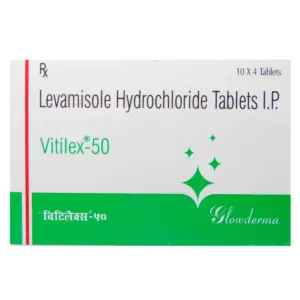
Vitilex 50 Mg (Levamisole)
Active Ingredient: Levamisole Indication: Worm infections Manufacturer: Glowderma Lab Ltd. Packaging: 4 Tablets in 1 strip Strength: 50mg Delivery Time: 7 to 15 days Price range: $17.00 through $60.00Vitilex 50 Mg (Levamisole)
Price range: $17.00 through $60.00 -
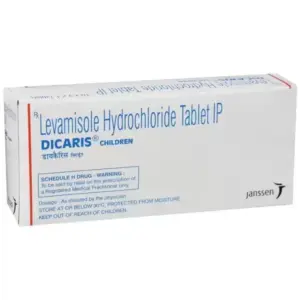
Dicaris Children 50 mg (Levamisole)
Active Ingredient: Levamisole Indication: Worm infections Manufacturer: Janssen Pharmaceuticals, India Packaging: 1 Tablet in 1 strip Strength: 50mg Delivery Time: 7 to 15 days Price range: $5.00 through $15.00Dicaris Children 50 mg (Levamisole)
Price range: $5.00 through $15.00 -
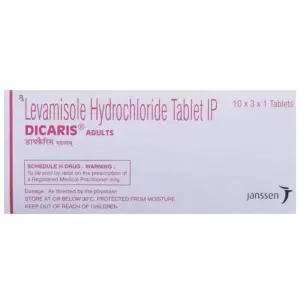
Dicaris Adults 150 mg (Levamisole)
Active Ingredient: Levamisole Indication: Worm infections Manufacturer: Janssen Pharmaceuticals, India Packaging: 1 Tablet in 1 strip Strength: 150mg Delivery Time: 7 to 15 days Price range: $5.00 through $20.00Dicaris Adults 150 mg (Levamisole)
Price range: $5.00 through $20.00 -
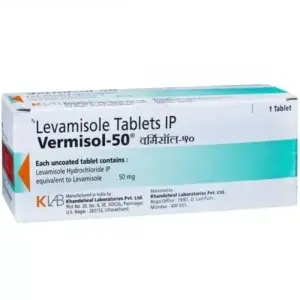
Vermisol 50 Tablet (Levamisole)
Active Ingredient: Levamisole Indication: Worm infections Manufacturer: Khandelwal Laboratories Pvt.Ltd. Packaging: 1 Tablet in 1 strip Strength: 50mg Delivery Time: 7 to 15 days Price range: $20.00 through $50.00Vermisol 50 Tablet (Levamisole)
Price range: $20.00 through $50.00