
Wormentel 222 Mg (Fenbendazole)

Price range: $20.00 through $150.00
| Active Ingredient: | Fenbendazole |
|---|---|
| Indication: | Treat a Variety of Parasites |
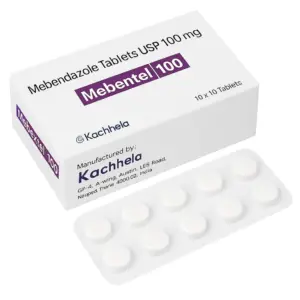
| Manufacturer: | Kachhela Medex Pvt. Ltd. |
| Packaging: | 10 tablets in 1 strip |
| Strength: | 150mg, 222mg, 444mg, 500mg, 888mg, 1000mg, |
| Delivery Time: | 7 to 15 days |
Wormentel 222 mg (Fenbendazole) — Complete Pharmacy Guide
What is Wormentel 222 mg?
In the world of antiparasitic medicine, few compounds have demonstrated the kind of consistent, reliable, and broad-spectrum efficacy that Fenbendazole has delivered across decades of veterinary use. Wormentel 222 mg is a precisely dosed formulation of Fenbendazole — a trusted benzimidazole anthelmintic that has earned its reputation as one of the most versatile and well-tolerated dewormers available in veterinary pharmacy today.
The “222 mg” designation refers to the quantity of Fenbendazole contained in each dose unit of this formulation — a strength carefully calibrated to deliver therapeutically effective concentrations of the drug in target animal species across a wide range of parasitic indications. Whether it is being used to clear a straightforward gastrointestinal roundworm burden in a dog, eliminate a mixed helminth infection in cattle, or address a more persistent Giardia infestation in companion animals, Wormentel 222 mg provides a dependable, evidence-backed treatment option.
Fenbendazole itself belongs to the benzimidazole class of anthelmintic drugs — a well-established family of antiparasitic agents that includes Albendazole and Mebendazole. First introduced into veterinary medicine in the early 1970s, Fenbendazole quickly distinguished itself from its predecessors through a combination of attributes that veterinarians and animal health professionals value highly: a broad spectrum of activity covering nematodes, cestodes, and protozoa; an excellent safety margin that permits use in pregnant animals and young animals; and a low risk of serious adverse effects at recommended doses.
Over the years, Fenbendazole has been the subject of extensive pharmacological research and clinical study — not only in veterinary medicine but increasingly in exploratory human medicine contexts, particularly in oncology research. While its primary and approved use remains firmly in the veterinary domain, this growing body of scientific interest has brought Fenbendazole into broader public awareness than most antiparasitic compounds ever achieve.
Wormentel 222 mg is available in multiple formulation types to accommodate diverse administration needs — including oral granules, paste, suspension, and tablet forms — making it adaptable across a wide range of animal species, sizes, and farm or clinic management situations.
The Science of How Fenbendazole Works?
Fenbendazole’s mechanism of action is elegant in its precision and well understood at the molecular level. To appreciate why it works so effectively against such a wide range of parasites, it is worth understanding what it actually does inside the parasite’s cells.
All living cells — including those of parasitic worms — rely on a structural protein called tubulin to build and maintain their internal scaffolding. Tubulin polymerizes (joins together) to form microtubules — hollow protein tubes that perform several vital cellular functions. Microtubules give cells their structural shape, form the tracks along which nutrients and cellular cargo are transported, and are essential for cell division (mitosis) — since they form the spindle apparatus that separates chromosomes during replication.
Fenbendazole works by binding selectively and with high affinity to beta-tubulin in parasitic cells. This binding physically prevents tubulin from polymerizing into functional microtubules — essentially dismantling the parasite’s internal scaffolding at a molecular level. The cascading consequences are severe and irreversible for the parasite:
- Loss of glucose uptake — microtubules are required for the transport of glucose across the intestinal cells of the worm; without them, the parasite is progressively starved of its energy source
- Impaired cell division — reproductive capacity is shut down as mitosis becomes impossible without a functional spindle apparatus
- Structural collapse — the parasite’s cells lose their integrity and functional organization
- Immobilization and death — deprived of energy and unable to maintain cellular function, the parasite becomes immobilized and dies
Importantly, Fenbendazole demonstrates selective toxicity — meaning it binds to parasite tubulin with significantly greater affinity than to mammalian tubulin. This selectivity is the pharmacological basis for its favorable safety profile in host animals. The parasite is targeted; the host is largely spared.
Additionally, Fenbendazole is absorbed from the gastrointestinal tract into the systemic circulation — though to a lesser degree than Albendazole — where it and its active metabolite Fenbendazole Sulfoxide (Oxfendazole) can reach tissues beyond the intestinal lumen, contributing to activity against tissue-dwelling larval stages and lungworms.
What Does Wormentel 222 mg Treat?
Fenbendazole’s broad spectrum is one of its most clinically valuable attributes. Wormentel 222 mg is effective against the following parasitic organisms across multiple target species:
In Dogs and Cats:
Gastrointestinal Nematodes (Roundworms):
- Toxocara canis — large intestinal roundworm; zoonotic risk to humans
- Toxascaris leonina — common roundworm in dogs and cats
- Ancylostoma caninum / Ancylostoma tubaeforme — hookworms causing blood loss and anaemia
- Uncinaria stenocephala — Northern hookworm; particularly in cool climates
- Trichuris vulpis — whipworm in dogs; causes chronic large bowel diarrhoea and weight loss
Tapeworms (Cestodes):
- Taenia spp. — common tapeworms in dogs and cats acquired through prey or intermediate hosts
- Echinococcus granulosus — hydatid tapeworm; of significant zoonotic and public health importance
Lungworms:
- Oslerus osleri — tracheal and bronchial worm in dogs
- Crenosoma vulpis — fox lungworm increasingly seen in domestic dogs
- Angiostrongylus vasorum (French Heartworm) — a serious and potentially fatal lungworm in dogs; Fenbendazole is one of the key treatment options
Protozoa:
- Giardia spp. — intestinal protozoan causing chronic diarrhoea, malabsorption, and weight loss in dogs, cats, and other species; Fenbendazole (typically given over 3–5 days) is a widely used treatment option
In Cattle:
- Ostertagia ostertagi (including inhibited L4 larvae) — the most clinically significant cattle roundworm worldwide
- Haemonchus placei — barber’s pole worm; causes severe blood loss
- Trichostrongylus axei / T. colubriformis — stomach and intestinal hairworms
- Cooperia spp. — small intestinal worms
- Nematodirus spp. — small intestinal worms; particularly significant in calves
- Bunostomum phlebotomum — cattle hookworm
- Oesophagostomum radiatum — nodular worm
- Trichuris spp. — whipworms
- Dictyocaulus viviparus — cattle lungworm (husk); causes parasitic bronchitis and pneumonia
- Moniezia spp. — tapeworms in cattle and sheep
In Sheep and Goats:
- Haemonchus contortus — barber’s pole worm; highly pathogenic blood feeder; major cause of anaemia and sudden death
- Teladorsagia circumcincta — brown stomach worm
- Trichostrongylus spp. — hairworms
- Nematodirus spp. — thread-necked worm; particularly serious in lambs
- Cooperia spp.
- Oesophagostomum spp. — nodular worms
- Chabertia ovina — large-mouthed bowel worm
- Dictyocaulus filaria — sheep lungworm
- Moniezia expansa / M. benedeni — tapeworms
In Horses:
- Large strongyles — Strongylus vulgaris, S. edentatus, S. equinus — migratory larvae of S. vulgaris cause arterial damage (verminous arteritis)
- Small strongyles (cyathostomes) — including encysted early L3 larvae at higher doses
- Parascaris equorum — ascarid roundworm; particularly significant in foals
- Oxyuris equi — pinworm causing perianal pruritus (tail rubbing)
- Trichostrongylus axei — stomach hairworm
- Dictyocaulus arnfieldi — equine lungworm
In Swine:
- Ascaris suum — large intestinal roundworm; causes significant production losses
- Oesophagostomum spp. — nodular worms
- Hyostrongylus rubidus — stomach worm
- Metastrongylus spp. — lungworms
- Trichuris suis — whipworm
Dosage and Administration:-
Precise dosing is the foundation of effective antiparasitic treatment. Underdosing is the primary driver of anthelmintic resistance development, while overdosing — though Fenbendazole has an excellent safety margin — is wasteful and potentially harmful. Always base dosing on accurate body weight.
Species-Specific Dosing Guide:
| Species | Standard Dose | Duration | Key Notes |
|---|---|---|---|
| Dogs | 50 mg/kg | Single dose or 3 consecutive days | 3-day course for tapeworms, Giardia, Angiostrongylus |
| Cats | 50 mg/kg | 3–5 consecutive days | 5 days for Giardia |
| Cattle | 7.5 mg/kg | Single dose | 10 mg/kg for Dictyocaulus; 7.5 mg/kg covers inhibited larvae |
| Sheep & Goats | 5 mg/kg | Single dose | 7.5–10 mg/kg for tapeworms and lungworms |
| Horses | 7.5 mg/kg | Single dose | 10 mg/kg for cyathostomes; 60 mg/kg over 5 days for encysted larvae |
| Swine | 5 mg/kg | Single dose or in-feed | In-feed medication for 3–12 days in some protocols |
| Rabbits | 20 mg/kg | 28 consecutive days | For Encephalitozoon cuniculi (EC) |
Administration Tips:
- Granule formulations can be mixed directly into a small amount of food — ensure the entire portion is consumed before offering the full meal
- Paste formulations should be administered directly into the mouth, deposited on the back of the tongue to prevent spitting out
- Suspension formulations must be shaken thoroughly before each use to ensure uniform drug distribution throughout the liquid
- Tablet formulations can be administered whole, broken, or crushed and mixed with food
- For livestock, ensure all animals in the treatment group receive their individual correct dose — communal dosing through drinking water or shared feed troughs makes accurate dosing impossible
- Always fast horses for 12–24 hours before treatment to improve drug distribution through the gastrointestinal tract
Withdrawal Periods for Food-Producing Animals
Wormentel 222 mg leaves residues in the tissues of treated food-producing animals for a defined period following administration. These residues must be allowed to clear to below maximum residue limits (MRLs) before the animal or its products enter the human food chain.
Indicative Withdrawal Periods:
| Species / Product | Meat Withdrawal | Milk Withdrawal |
|---|---|---|
| Cattle (meat) | 14–21 days | Not approved for milking cows in many regions |
| Sheep (meat) | 10–14 days | Variable — check local regulations |
| Swine (meat) | 14–21 days | Not applicable |
| Horses | Not licensed for food horses in most countries | Not applicable |
| Poultry | Variable — consult label | Variable — consult label |
These are indicative figures only. Withdrawal periods vary by product formulation, route of administration, and regional regulatory requirements. Always consult the specific product label and comply with national food safety authority guidelines. Non-compliance is a regulatory offense and a serious public health risk.
Contraindications and Precautions:-
Absolute Contraindications:
- Do not use in animals with known hypersensitivity or previous allergic reaction to Fenbendazole, other benzimidazoles, or any excipient in the formulation
- Do not use in severely debilitated, cachectic, or immunocompromised animals without veterinary supervision and close monitoring
- Do not use in species not listed on the product label without veterinary guidance
Pregnancy and Lactation: One of Fenbendazole’s distinguishing features compared to many other anthelmintics is its excellent safety record in pregnant animals. It has been extensively used in pregnant dogs, cats, cattle, sheep, and horses without significant adverse effects on the dam or developing offspring. In fact, treatment of pregnant bitches during the final third of gestation is a commonly recommended protocol to reduce vertical transmission of Toxocara canis to puppies. Always confirm suitability with your veterinarian for the specific species and stage of pregnancy involved.
In lactating animals producing milk for human consumption, use only if the product label specifically permits it and observe all applicable milk withdrawal periods.
Young Animals: Fenbendazole is considered safe for use in young animals — including puppies and kittens from 2 weeks of age, and young livestock. For neonates, always use weight-based dosing and consult a veterinarian for appropriate guidance.
Concurrent Illness: Animals with significant hepatic disease may have altered drug metabolism. Consult a veterinarian before treating animals with known liver conditions, particularly if prolonged or repeated therapy is planned.
Drug Interactions:-
Fenbendazole has a relatively limited interaction profile compared to many other drug classes, but the following are worth noting:
- Bromsalans (Tribromsalan, Dibromsalan) — concurrent use with Fenbendazole has been associated with fatal reactions in sheep; this combination must be strictly avoided
- Other benzimidazoles — concurrent use of multiple benzimidazole-class drugs offers no additional therapeutic benefit and may increase toxicity risk; avoid combination use
- Piperazine — concurrent use may reduce the efficacy of both drugs; avoid simultaneous administration
- Levamisole — can be used sequentially as part of a resistance management rotation but generally not simultaneously without veterinary guidance
- Glucocorticoids (Corticosteroids) — may theoretically alter immune response to dying parasites but no clinically significant pharmacokinetic interaction has been established
Always inform your veterinarian of all products — medications, supplements, nutritional additives, and topical treatments — being used concurrently in the animal being treated.
Side Effects and Adverse Reactions:-
Fenbendazole has one of the most favorable safety profiles of any anthelmintic drug in veterinary use. At recommended therapeutic doses, adverse effects are uncommon and generally mild.
Common and Generally Mild:
- Transient loose stools or soft faeces in the 24–48 hours following treatment — particularly when a heavy parasite burden is being cleared
- Mild nausea or hypersalivation — particularly in cats receiving paste formulations
- Temporary reduction in appetite on the day of treatment
Die-Off (Larval Death) Reaction: In animals carrying exceptionally heavy parasite burdens — particularly those with large numbers of migrating larvae — rapid killing of parasites can provoke a transient inflammatory reaction as the host’s immune system processes large quantities of dying parasitic material. Signs may include:
- Transient fever
- Mild abdominal discomfort
- Temporary worsening of diarrhoea
This reaction is self-limiting and typically resolves within 48–72 hours. Ensuring adequate hydration and rest during this period is advisable. In severe cases, veterinary supportive care may be appropriate.
Rare Adverse Effects:
- Bone marrow suppression (pancytopenia) — reported very rarely with prolonged high-dose therapy; monitor blood parameters during extended treatment courses
- Skin hypersensitivity reactions — erythema, urticaria, or pruritus; discontinue use and consult a veterinarian if these occur
- Elevated liver enzyme levels — rare; more likely with prolonged therapy in animals with pre-existing hepatic compromise
Overdose: Fenbendazole has a wide safety margin — studies have demonstrated tolerability at doses many times the recommended therapeutic level in most species. However, sustained very high doses may eventually cause gastrointestinal and bone marrow effects. If accidental overdose is suspected, contact a veterinarian for guidance.
Anthelmintic Resistance — What You Need to Know?
Benzimidazole resistance — including resistance to Fenbendazole — is now widespread in sheep and goat nematode populations worldwide, and is increasingly documented in equine cyathostomes and cattle nematodes on some properties. This is one of the most pressing challenges facing modern parasitology and veterinary medicine.
How Resistance Develops: When parasites are repeatedly exposed to a drug at subtherapeutic concentrations — through underdosing, frequent treatment, or treating animals unnecessarily — the small proportion of worms that carry genetic resistance to the drug survive and reproduce, passing their resistant genes to the next generation. Over time, the resistant population grows until the drug no longer provides adequate control.
Strategies to Preserve Fenbendazole Efficacy:
- Always dose accurately by body weight — use a calibrated weighbridge or weigh tape; never estimate
- Perform fecal egg count reduction tests (FECRT) before and after treatment to verify efficacy on your property
- Adopt targeted selective treatment (TST) — treat only animals that need treatment based on body condition score, FAMACHA score (anaemia assessment), fecal egg counts, and clinical signs
- Maintain refugia — always leave a proportion of the animal population untreated to ensure a population of susceptible worms remains to dilute resistant genes in the environment
- Rotate drug classes strategically — rotate between benzimidazoles, macrocyclic lactones, and levamisole based on FECRT results showing continued efficacy; rotation for its own sake without efficacy monitoring is not recommended
- Apply quarantine dosing protocols — treat all incoming animals with a combination product and hold off pasture for 48–72 hours before allowing access to grazing
- Consult a veterinary parasitologist for a property-specific integrated parasite management (IPM) plan
Storage and Handling:-
- Store at room temperature between 15°C and 25°C (59°F–77°F)
- Protect from direct sunlight, excessive heat, and moisture
- Do not freeze suspension or liquid formulations
- Store granules in a cool, dry location in their original sealed packaging
- Keep all products out of reach of children, non-target animals, and pets
- Shake suspension formulations thoroughly before each use to ensure homogeneous drug distribution
- Once opened, use within the timeframe specified on the product label
- Wash your hands thoroughly with soap and water after handling any antiparasitic product
- Wear appropriate protective gloves when handling large volumes of product or administering to multiple animals
- Dispose of empty containers and unused product in accordance with local pharmaceutical and environmental waste regulations — do not burn, bury, or pour down drains
Frequently Asked Questions (FAQs)?
Q1. Is Wormentel 222 mg safe for use in pregnant animals?
Yes — Fenbendazole is one of the few anthelmintics with a well-established and reassuring safety record in pregnant animals across multiple species. It is commonly used in pregnant dogs, cats, cattle, sheep, and horses. Treatment of pregnant bitches during the last trimester is a standard protocol for reducing Toxocara transmission to puppies. Always confirm timing and dosing with your veterinarian for the specific species and stage of pregnancy.
Q2. How long should I give Wormentel 222 mg for Giardia?
For Giardia infections in dogs and cats, a minimum 3–5 day course of Fenbendazole at 50 mg/kg per day is typically recommended. Some veterinary parasitologists advocate for a 5-day course to maximize efficacy, particularly in persistent or recurrent cases. Environmental decontamination — thorough cleaning of bedding, food bowls, and living areas — is essential alongside drug treatment to prevent reinfection, as Giardia cysts are extremely environmentally hardy.
Q3. Can Wormentel 222 mg be used in rabbits?
Yes — Fenbendazole has an important and well-established use in rabbits for the treatment and prevention of Encephalitozoon cuniculi (EC) — a microsporidian parasite that can cause neurological signs, renal disease, and uveitis in pet rabbits. The recommended protocol is typically 20 mg/kg daily for 28 consecutive days. This is one of the few licensed treatment options for EC in rabbits and is widely used in rabbit medicine. Consult a rabbit-savvy veterinarian for diagnosis and treatment planning.
Q4. Why is a 3-day course sometimes recommended instead of a single dose?
For certain parasitic targets — particularly tapeworms, Giardia, Angiostrongylus vasorum in dogs, and encysted cyathostome larvae in horses — a single dose of Fenbendazole does not provide sufficient drug exposure time to achieve reliable efficacy. A 3-day consecutive course at the standard dose significantly increases the total drug exposure and improves efficacy against these more difficult targets. Your veterinarian will advise the most appropriate course length based on the specific parasite being treated.
Q5. Can Wormentel 222 mg treat lungworm in dogs?
Yes — Fenbendazole is one of the primary treatment options for several canine lungworm infections, including Oslerus osleri, Crenosoma vulpis, and — critically — Angiostrongylus vasorum (French Heartworm), which can be life-threatening if left untreated. Treatment protocols for Angiostrongylus typically involve a minimum 3-day course, often extended to 7 days, and may be combined with supportive veterinary care for severely affected animals. Prompt diagnosis and treatment are essential for the best outcomes.
Q6. Does Wormentel 222 mg kill worm eggs?
Fenbendazole primarily targets adult and larval worm stages rather than eggs directly. However, by preventing cell division and disrupting the embryonic development of eggs that have not yet hatched, it does have some ovicidal (egg-killing) activity — particularly against eggs that are in early developmental stages. This is one of the properties that makes prolonged or multi-day courses more effective for certain parasitic infections, where egg development and larval stages are part of the treatment target.
⚠️ Disclaimer:-
The information provided in this comprehensive guide about Wormentel 222 mg (Fenbendazole) is intended strictly for general educational and informational purposes within a veterinary context. It does not constitute veterinary advice, a clinical diagnosis, or a personalized treatment recommendation for any specific animal, herd, flock, or situation. This content should never replace consultation with a qualified and licensed veterinarian who is familiar with the species, individual health status, local parasite epidemiology, and specific circumstances of the animals being treated.
Dosage guidelines, withdrawal periods, indications, contraindications, drug interactions, and safety information presented in this guide are based on established veterinary pharmacological and clinical literature. These may vary according to species differences, regional regulatory requirements, specific product formulations available in your market, and evolving clinical evidence and resistance patterns.
Additional information
| unit | 100 Tablets, 200 Tablets, 300 Tablets |
|---|---|
| mg | 1000 Mg, 150 Mg, 222 Mg, 444 Mg, 500 Mg, 888 Mg |

Reviews
There are no reviews yet.