
Pyrantel — Because Worms Don’t Belong in Your Body
It’s Time to Take Care of What’s Going on Inside
Most people focus on what they eat, how they sleep, and how much they exercise. But very few think about what might be living inside their digestive system without their knowledge. Intestinal worm infections are quietly common — and often go unnoticed for weeks or even months. If you’ve been feeling low on energy, dealing with an unsettled stomach, or experiencing unexplained itching, don’t ignore it. Pyrantel is a straightforward, clinically trusted medicine that gets rid of intestinal worms — simply, safely, and effectively.
So, What Exactly Is Pyrantel?
Pyrantel is an antiparasitic medicine that has been used in healthcare for over five decades. It belongs to a class of medicines called anthelmintics — drugs specifically designed to eliminate parasitic worms from the body.
Here’s how it works in plain language: once you take Pyrantel, it targets the worms directly inside your intestines. It causes a kind of paralysis in the worm’s muscles, making it impossible for them to hold on to the intestinal walls. With nowhere to grip, the worms are naturally pushed out of your body through a normal bowel movement — no drama, no discomfort.
What makes Pyrantel particularly well-regarded is that it barely enters your bloodstream. It does its job right where the problem is — inside the gut — and leaves the rest of your body largely undisturbed. This makes it a safe and well-tolerated choice for most people.
Which Worm Infections Does Pyrantel Treat?
Not all worm infections are the same. Pyrantel is specifically effective against three of the most common types:
Pinworms These are tiny, thread-like worms that are incredibly contagious. The most telling sign is intense itching around the anal area — particularly at night. Pinworm infections are widespread and can affect anyone, though they are especially common in children and spread easily in shared living spaces.
Roundworms Roundworms are larger parasites that settle in the small intestine and quietly feed on the nutrients from your food. Over time, this leads to unexplained weight loss, a bloated abdomen, general weakness, and nutritional gaps that no diet can fix — because a worm is eating your food before your body can absorb it.
Hookworms Hookworms are perhaps the sneakiest of the three. They latch onto the intestinal lining and feed on blood. This persistent blood loss often results in iron-deficiency anaemia, leaving you feeling constantly drained, pale, and short of breath — symptoms that are easy to confuse with other health issues.
Who Is Pyrantel Suitable For?
Pyrantel is suitable for a broad range of people:
- Children aged 2 years and above
- Teenagers and adults of all ages
- Older adults, provided they have no underlying liver conditions
If you are pregnant, breastfeeding, or managing a chronic liver condition, it is best to speak with a doctor before starting Pyrantel. Similarly, for children under 2 years, always seek medical advice before use.
How Do You Take It?
Pyrantel comes in three easy-to-use forms, so you can choose whatever suits you best:
Syrup / Oral Suspension — A measured liquid form, usually available in a mild fruit flavour. Easy to swallow and simple to dose accurately. A practical choice for those who struggle with tablets.
Chewable Tablets — These can be chewed directly or crushed and stirred into a small amount of food if needed. Flexible and convenient.
Standard Tablets — A clean, simple tablet for those who prefer a no-fuss approach.
The recommended dose is based on your body weight — typically 11 mg per kg, up to a maximum single dose of 1 gram.
- For pinworm infections: one dose, repeated after two weeks
- For roundworm infections: a single one-time dose
- For hookworm infections: one dose daily for three consecutive days
Always check the dosage instructions on the product label or follow your doctor’s or pharmacist’s guidance.
Are There Any Side Effects?
Pyrantel is generally well tolerated. Because it works locally in the intestines and is minimally absorbed into the bloodstream, most people experience little to no side effects. In some cases, mild and temporary reactions may include:
- Slight nausea or stomach discomfort
- Loose stools or diarrhoea
- Mild headache or dizziness
- Temporary loss of appetite
These effects typically pass quickly on their own. If anything feels severe or prolonged, stop use and consult a healthcare professional.
Don’t Let the Worms Come Back
Treating the infection is the first step — keeping it away is equally important. A few simple habits make a real difference:
- Wash your hands with soap before meals and after the toilet — every single time
- Keep your nails trimmed and clean
- Wash bed linen and underwear after beginning treatment
- Always eat washed produce and drink clean water
- Avoid walking barefoot on soil or damp ground
These aren’t complicated steps. But they are the difference between a one-time treatment and a recurring problem.
Why Pyrantel Stands Out?
There is no shortage of deworming options on the market. But Pyrantel has remained a go-to choice for doctors and patients for one simple reason — it works, and it works well. It has a long safety record, acts precisely where it needs to, and is available in forms that suit different needs and age groups. For most common worm infections, a single dose is all it takes.
Explore Our Pyrantel Range
Take a look at the products listed below, pick the right form for your needs, and get started. Feeling better on the inside is simpler than you think.
Always read the product label before use. When in doubt about the right dosage or product, consult your doctor or pharmacist.
-
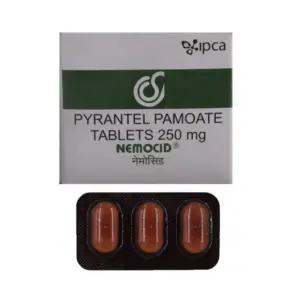
Nemocid 250 Mg (Pyrantel)
Active Ingredient: Pyrantel Indication: Worm infections Manufacturer: Ipca Laboratories Ltd Packaging: 3 tablets in 1 strip Strength: 250mg Delivery Time: 7 to 15 days Price range: $35.00 through $110.00Nemocid 250 Mg (Pyrantel)
Price range: $35.00 through $110.00