
Fenbendazole — Quietly Powerful. Broadly Effective.
The Antiparasitic That Works Without Making a Fuss
Some medicines come with big claims and loud marketing. And then some medicines simply get the job done — quietly, reliably, and consistently. Fenbendazole falls firmly into the second category. Originally developed for veterinary use, Fenbendazole has grown significantly in recognition as a human antiparasitic treatment over recent years. It is methodical in how it works, broad in what it covers, and increasingly respected in medical and research communities for reasons that go well beyond basic deworming.
If you are looking for a treatment that is thorough, well-researched, and grounded in decades of real-world use — read on.
What Is Fenbendazole?
Fenbendazole is a benzimidazole-class antiparasitic medicine — the same family as Albendazole and Mebendazole. It works by interfering with a structural protein in parasites called beta-tubulin. This protein is essential for building the internal skeleton of the worm’s cells. Without it, the parasite cannot maintain its cellular structure, absorb nutrients, or reproduce. Cell division stops. Energy production collapses. The worm dies and is expelled from the body naturally.
What makes Fenbendazole stand out within its class is its particularly strong binding affinity to parasitic beta-tubulin — meaning it disrupts worm cells more selectively and efficiently, with minimal interference to human cells. This gives it a strong safety profile even at therapeutic doses.
What Does Fenbendazole Treat?
Fenbendazole is effective against a notable range of intestinal and tissue-dwelling parasites:
Intestinal Roundworms (Nematodes)
- Roundworms (Ascaris lumbricoides) — Among the most prevalent parasitic infections globally, causing nutritional deficiency, abdominal discomfort, and poor energy levels
- Hookworms (Ancylostoma / Necator americanus) — Blood-feeding worms that cause persistent anaemia, fatigue, and weakness
- Whipworms (Trichuris trichiura) — Responsible for chronic diarrhoea, abdominal cramping, and long-term digestive discomfort
- Pinworms (Enterobius vermicularis) — Highly contagious worms causing intense itching, sleep disruption, and irritability
Tissue-Invading Parasites
- Strongyloidiasis (Strongyloides stercoralis) — A persistent and potentially serious infection where larvae penetrate the skin and migrate through body tissues before settling in the intestines
- Trichinellosis (Trichinella spiralis) — Caused by consuming undercooked meat containing larvae, which then migrate into muscle tissue, causing pain, swelling, and fever
- Capillariasis — A less common but serious intestinal infection causing severe diarrhoea, protein loss, and malnutrition
Emerging Research Areas Beyond its established antiparasitic role, Fenbendazole has attracted growing scientific interest in recent years for potential applications in oncology research. Several laboratory and early clinical studies have explored its effect on certain cancer cell lines, largely due to its action on tubulin, a protein also critical to cancer cell division. While this research is still ongoing and Fenbendazole is not approved as a cancer treatment, the scientific community continues to investigate its broader pharmacological properties with considerable interest.
Symptoms That Should Prompt a Conversation with Your Doctor
Parasitic infections rarely announce themselves clearly. They often hide behind symptoms that look like something else entirely. Consider speaking to a healthcare professional about Fenbendazole if you notice:
- Ongoing digestive issues — bloating, cramping, or unpredictable bowel movements
- Persistent fatigue or low energy with no obvious explanation
- Unexplained weight loss despite a normal or increased appetite
- Itching around the anal area, particularly disturbing sleep at night
- Skin rashes, hives, or unusual surface reactions
- Muscle aches, swelling, or tenderness without injury (may indicate tissue-invading parasites)
- Recent travel to regions with limited sanitation infrastructure
- Regular consumption of undercooked meat, raw fish, or untreated water sources
A confirmed diagnosis through appropriate testing is always the recommended starting point before any treatment.
How Is Fenbendazole Taken?
Fenbendazole is available in tablet and granule/powder form, taken orally — ideally with or after a meal to support better absorption.
Dosage depends on the type and severity of infection:
| Infection | Typical Adult Dose | Duration |
|---|---|---|
| Roundworm / Whipworm / Hookworm | 100–500 mg | Single dose or 3 days |
| Pinworms | 100 mg single dose | Repeat after 2 weeks |
| Strongyloidiasis | 500 mg daily | 3 consecutive days |
| Trichinellosis | As prescribed | Several days under supervision |
Dosage for children is weight-dependent. All dosing should be confirmed with a qualified doctor or pharmacist.
Who Can Take Fenbendazole?
Fenbendazole is generally suitable for:
- Adults requiring treatment for intestinal or tissue-based parasitic infections
- Children — under medical supervision with appropriate weight-based dosing
Exercise caution or seek medical advice before use if you are:
- Pregnant or breastfeeding — Safety data in humans is limited; medical guidance is essential
- Managing liver or kidney conditions — Dose adjustment or closer monitoring may be required
- Taking other medications — Inform your doctor of all current medicines to check for interactions
Side Effects — Keeping It Honest
Fenbendazole is considered well-tolerated, particularly for short-course intestinal treatments. Possible side effects include:
- Mild nausea or stomach discomfort
- Loose stools or temporary diarrhoea
- Abdominal cramping
- Dizziness or headache in some individuals
- Elevated liver enzymes with prolonged use — monitored through routine blood tests
Serious reactions are uncommon. If anything feels severe or unexpected, stop use and consult a doctor promptly.
Habits That Keep Parasites Away
Treatment clears the infection. Habits keep it from returning:
- Wash hands thoroughly before every meal and after every toilet visit
- Cook meat and fish to safe, recommended internal temperatures
- Avoid drinking untreated or unfiltered water
- Wash all raw vegetables and fruits carefully before eating
- Wear footwear outdoors, especially on damp or muddy ground
- Store and handle food hygienically at all times
Why Fenbendazole Is Worth Knowing About?
Fenbendazole does not get the same level of mainstream attention as some other dewormers. But in terms of breadth of action, safety profile, and growing scientific interest, it is quietly one of the most significant antiparasitic medicines available today. Whether you are addressing a confirmed parasitic infection or exploring options under medical guidance, Fenbendazole deserves a place in that conversation.
Explore Our Fenbendazole Range
Browse the products listed below. Each one is selected for quality and reliability. If you have questions about which product is right for your situation, do not hesitate to speak with your pharmacist or healthcare provider before purchasing.
Disclaimer:-
Fenbendazole should be taken under medical supervision, particularly for tissue-based infections or extended treatment courses. Always consult a qualified doctor before starting any new medication.
-
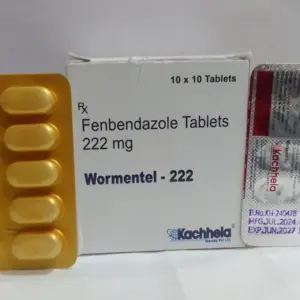
Wormentel 222 Mg (Fenbendazole)
Active Ingredient: Fenbendazole Indication: Treat a Variety of Parasites Manufacturer: Kachhela Medex Pvt. Ltd. Packaging: 10 tablets in 1 strip Strength: 150mg, 222mg, 444mg, 500mg, 888mg, 1000mg, Delivery Time: 7 to 15 days Price range: $20.00 through $150.00Wormentel 222 Mg (Fenbendazole)
Price range: $20.00 through $150.00 -

Wormentel Duo 156 (Fenbendazole/Ivermectin)
Active Ingredient: Fenbendazole/Ivermectin Indication: Parasitic infections, Anti-Worm Manufacturer: Kachhela Medex Pvt. Ltd. Packaging: 10 tablets in 1 strip Strength: 156mg Delivery Time: 7 To 15 days Price range: $85.00 through $205.00Wormentel Duo 156 (Fenbendazole/Ivermectin)
Price range: $85.00 through $205.00